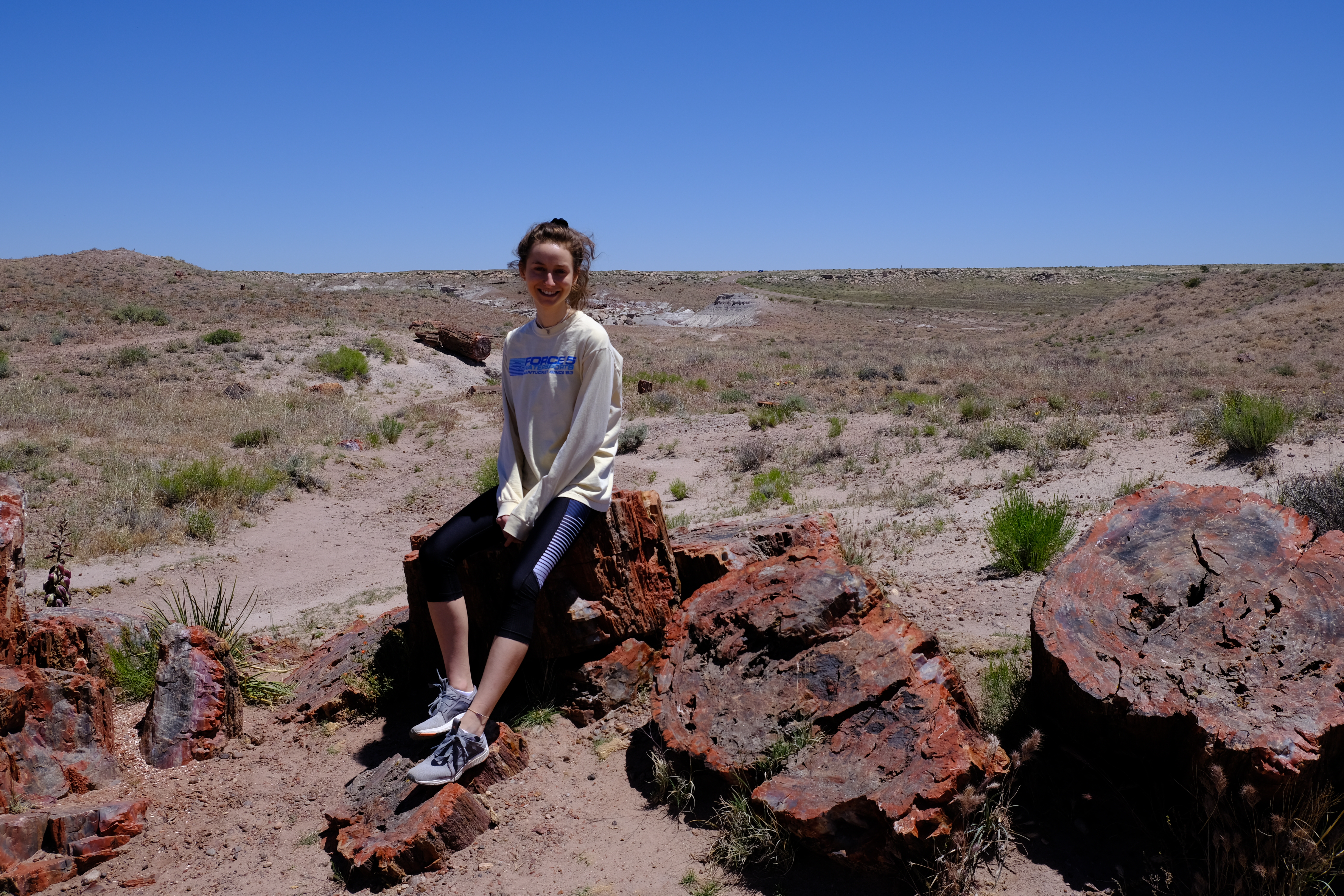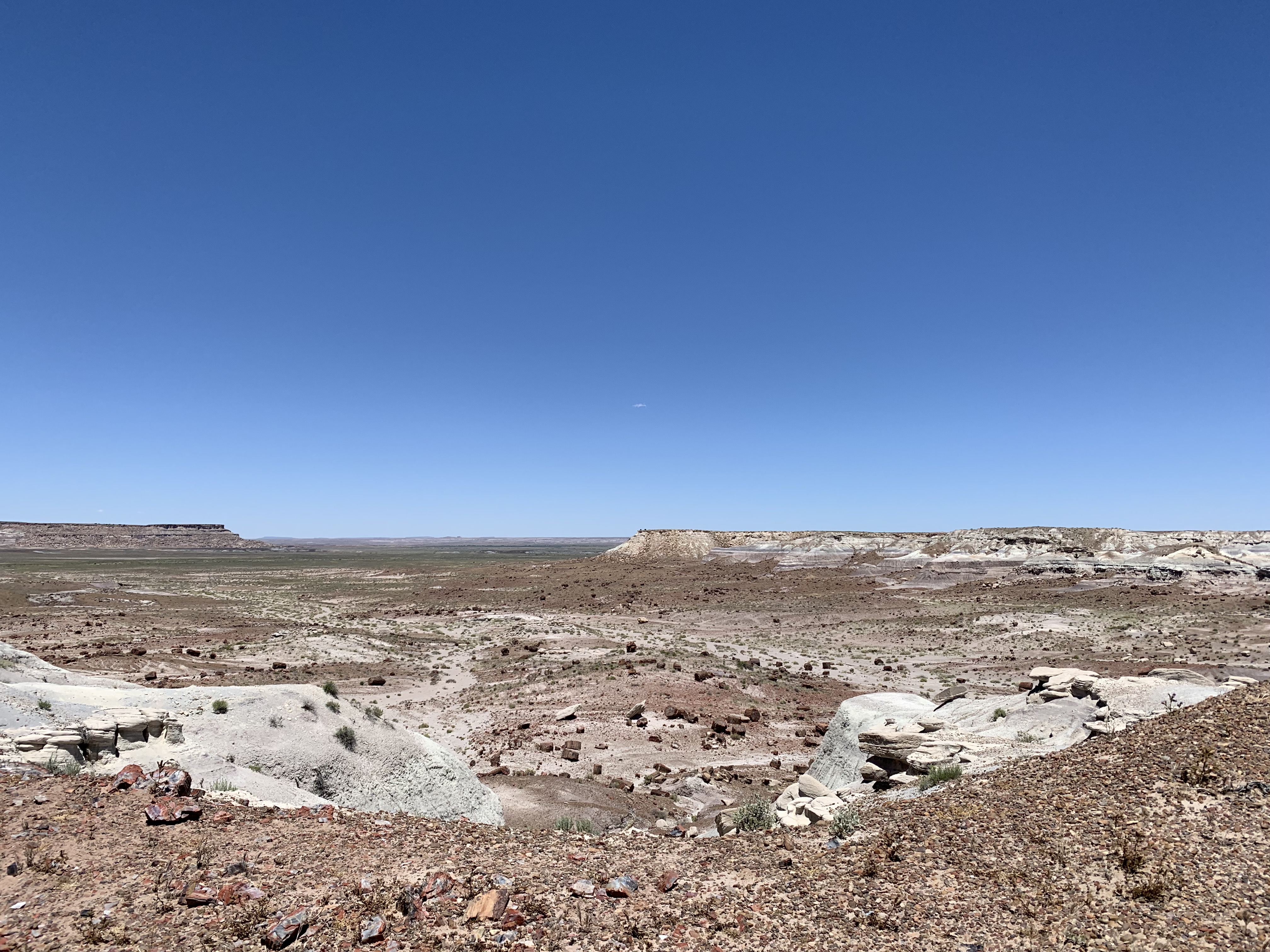

The last national park stop on our trip this year was The Petrified Forest and Painted Desert. The Petrified Forest stretches across the northeastern part of Arizona, in Navajo territories. This beautiful 230 square acre park is filled with desert plants, wild animals and the most spectacular collection of petrified wood in the world. Millions of year ago trees in this area got buried in mud and volcanic ash, the silica recrystallized inside the wooden trees, turning them into stone. It was absolutely incredible to walk through fields of fallen petrified trees unmoved by man. These trees didn’t just look like they had regular bark, different minerals gave these stone trees multicolored trunks that almost sparkled in the late afternoon sun. At the most southern tip of this stone forest, the Painted Desert starts to emerge from the ground. This Desert is named for the vibrant colors in the stone that you are able to see because of years of erosion. The stone is primarily iron and magnesium which gives it its signature dark red color. The setting sun across the desert made the hills look like they were on fire.
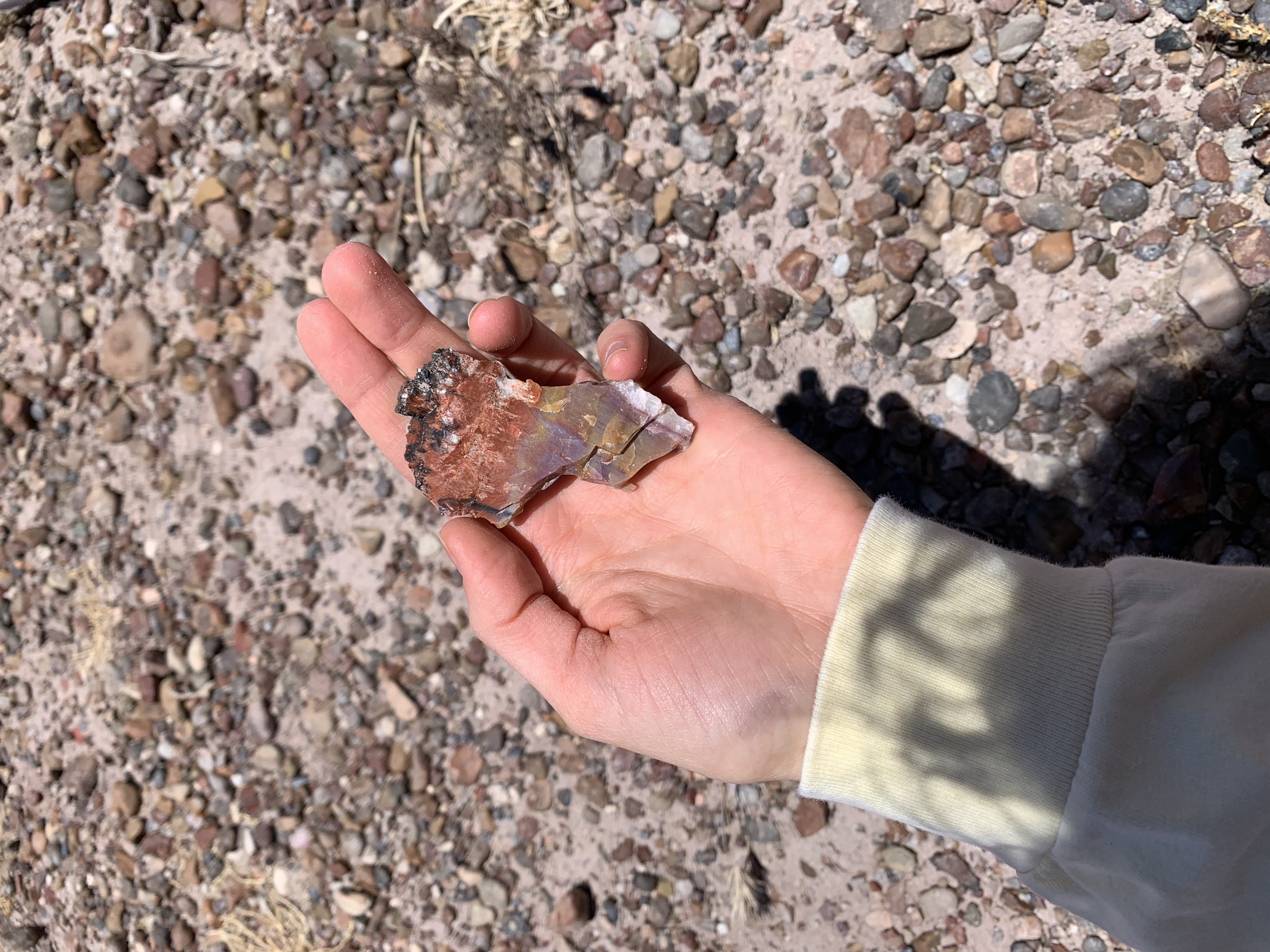
Unlike most National Parks, in the Petrified Forest there was one hiking trail where you were allowed to walk off the beaten path and interact with nature. The park rangers actually encouraged people to wonder off this trail and pick up the wooden stone, as long as you put it right back where you found it. This was special because in most national parks you are instructed to stay on the trail. In one 0f his essay’s, Jack Turner argues that humans no longer see real nature because even in reserved wilderness areas there are restrictions to where you are allowed to walk. I agree with Turner to a certain degree, I think it would be wonderful if we could just roam freely around national parks, but unfortunately there are rules for a reason. These rules are meant to protect and preserve this magnificent land, so people can enjoy it in perpetuity. But while I was walking off the trail in the Petrified Forest I started to understand Turner’s words, even though it felt like I was breaking the rules I got to interact with nature and wilderness in a special way. Seeing these wooden stones up close, actually touching them and feeling how heavy they were was a more profound experience than just looking at them from afar. Although I understand what Turner is arguing for, it is important that national parks have rules to protect the limited amount of true wilderness that is left in our world.
Here are some pictures from my trip!